Food contact · 3 min read
Food-Contact Packaging: What Migration Testing Checks
Overall and specific migration, choosing the right food simulant, and the mistakes that make a passing result meaningless.
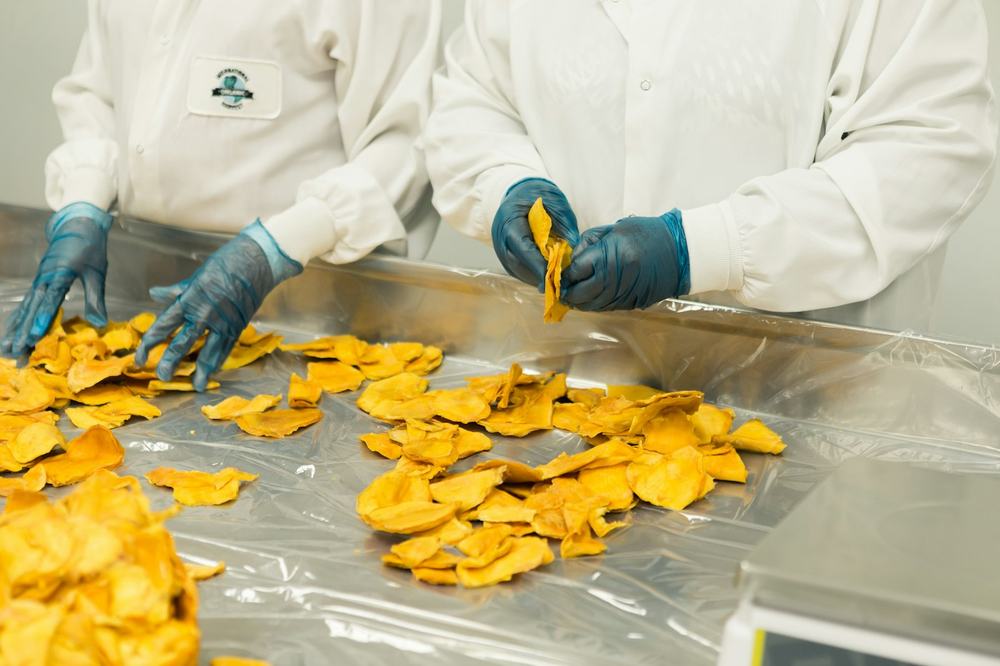
Every plastic that touches food gives up a small amount of itself to that food. Residual monomers, additives, processing aids and the low-molecular-weight fractions of the polymer can all move from the packaging into what it holds. Migration testing measures how much, so that you can show it stays within safe and permitted limits.
Overall and Specific Migration
Overall migration is the total amount of non-volatile substances that move from the packaging into a food simulant under set conditions. It is a measure of the inertness of the material as a whole. In India the method for plastic materials and articles is IS 9845:1998, and the result is generally determined by weighing the residue left after the simulant is evaporated. It is expressed in milligrams per square decimetre of food-contact surface.
Specific migration looks at individual substances that have their own limits, such as certain monomers or additives. It needs analytical methods for each substance and is chosen according to what the material is made of.
A passing overall migration result shows that the material is broadly inert. It does not show that every individual substance is within its own limit, so the two kinds of test answer different questions.
Choosing the Simulant
Testing with real food is rarely practical, so the test uses food simulants: liquids that behave like a type of food in the way they draw substances out of plastic. The simulant is chosen to match the food the packaging will hold.
| Simulant | Represents |
|---|---|
| Distilled water | Watery foods |
| 3% acetic acid | Acidic foods |
| 10% ethanol | Alcoholic foods and drinks |
| 50% ethanol | Foods with higher alcohol content, and some oil-in-water products |
| n-Heptane | Fatty foods |
| Olive oil or a suitable fat simulant | Fatty foods |
A pickle in oil, a fruit juice and a dry snack need different simulants, and a packaging material approved for one is not automatically suitable for another.
Time and Temperature
Migration increases with temperature and contact time, so the test conditions are chosen to represent the worst realistic use of the pack. Hot filling, retort processing, microwave heating and long storage at room temperature each call for different conditions. A pouch tested at room temperature tells you little about how it behaves when filled with hot food.
Mistakes That Make a Result Meaningless
- Testing the wrong layer. In a laminate, the layer that touches the food is the one that matters. Make sure the test exposes the food-contact surface of the finished structure.
- Choosing the simulant for convenience. A watery simulant will not reveal what an oily product draws out.
- Ignoring how the pack is really used. If the product is hot filled, sterilised or heated in the pack, the test conditions should reflect it.
- Not testing again after a change. A new resin grade, a different adhesive or ink, or a new supplier can change migration. Treat the result as belonging to one specific material.
- Forgetting colour. Printed and coloured materials can transfer colour to food; colour migration can be assessed as well.
Limits and Regulations
In India, the Food Safety and Standards (Packaging) Regulations, 2018 govern materials that come into contact with food and refer to Indian Standards for plastics. Limits and requirements are amended from time to time, so check the current text for your material and your product category before you rely on a result. A laboratory report gives you the measurement; the compliance decision rests on applying the right limit to it.
Planning a Test
Tell the laboratory the material and its structure, the food it will hold, and how it will be filled, stored and used. From that the simulant, the time and temperature and the number of samples can be chosen so that the result means something.